Content on this page requires a newer version of Adobe Flash Player.

Get Adobe Flash player

Welcome to Central Mainland

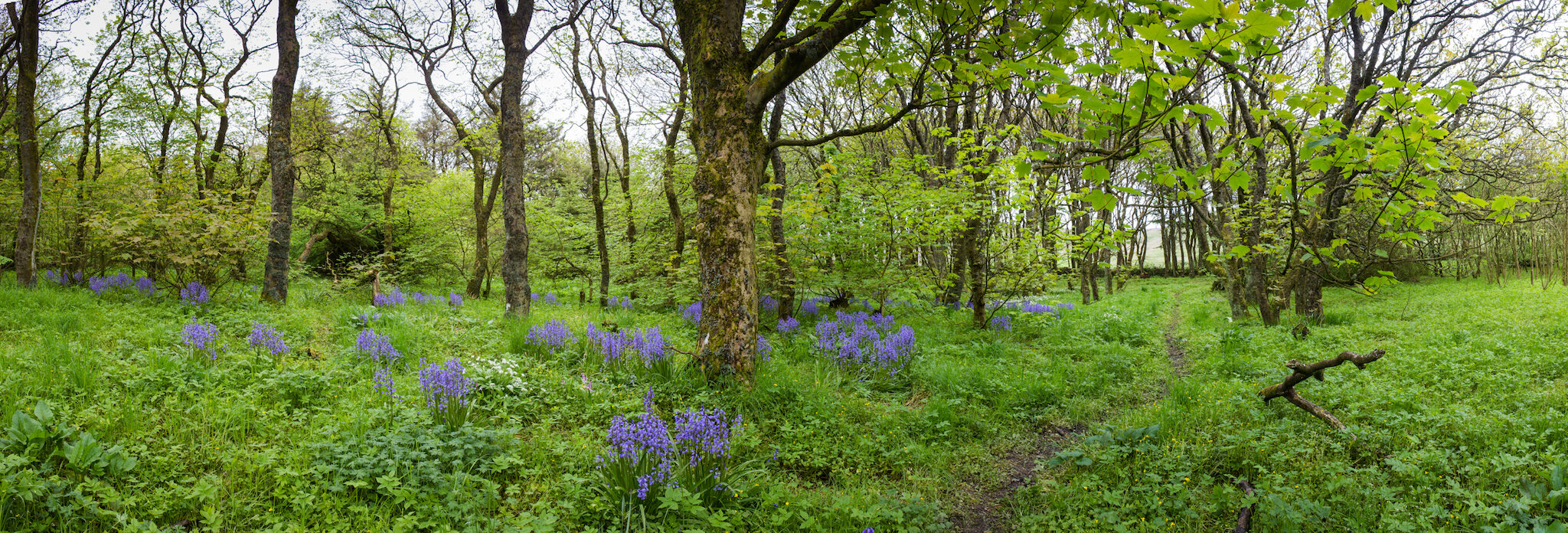
Central Shetland is a landscape of intricate contrasts: where layers of limestone make slashes of green between brown hills of harder rock; where long, narrow sea lochs, or voes, gouged out by glaciers, run miles into the land; it's great walking and fishing country, with scenery, wild flowers and birdlife of amazing richness and variety.

Burra and Trondra Isles

At Burland on Trondra the Shetland Croft Trail is a wonderful place for children to see old Shetland breeds of livestock and learn about crofting history and traditional crafts such as boatbuilding.

The Burra Bridge leads to the pretty fishing village of Hamnavoe, with a lovely coastal walk out to the lighthouse on Fugla Ness and along the Sands of Meal, one of Shetland's finest beaches and a favourite picnic spot (with convenient car park).

At the south end of West Burra the roofless kirk of St Laurence at Papil is famous for three early Christian carved stones found in the graveyard. Two of the original stones and a replica of the Monks' Stone are on show at the Shetland Museum in Lerwick. At Duncansclate there's a fine example of an old croft house with a thatched chimney.

A footpath from the car park leads down to the Atlantic storm beach of Banna Minn and on to Kettla Ness, a wild headland with seals and colonies of Arctic Skuas and Arctic Terns; please keep to the edge of the nesting grounds - if you disturb these birds they will probably desert their nests.

On an islet next to the bridge between East and West Burra is the Outdoor Centre, a former school now used as a hostel, ideally situated for kayaking, walking and nature study holidays. The short turf on Burra's rocky hills and shores makes perfect hiking country. A walk up to the reservoir on East Burra, past a seven-foot-high standing stone, gives one of the best panoramas of the islands. Beyond the hamlet of Houss lies Houss Ness, a promontory with more good walking, rock scenery, seabirds and seals. And, wherever you walk or drive in Burra, there's always that mysterious and dramatic silhouette of the isle of Foula, out on the Atlantic horizon.

Scalloway: 'The Ancient Capital'

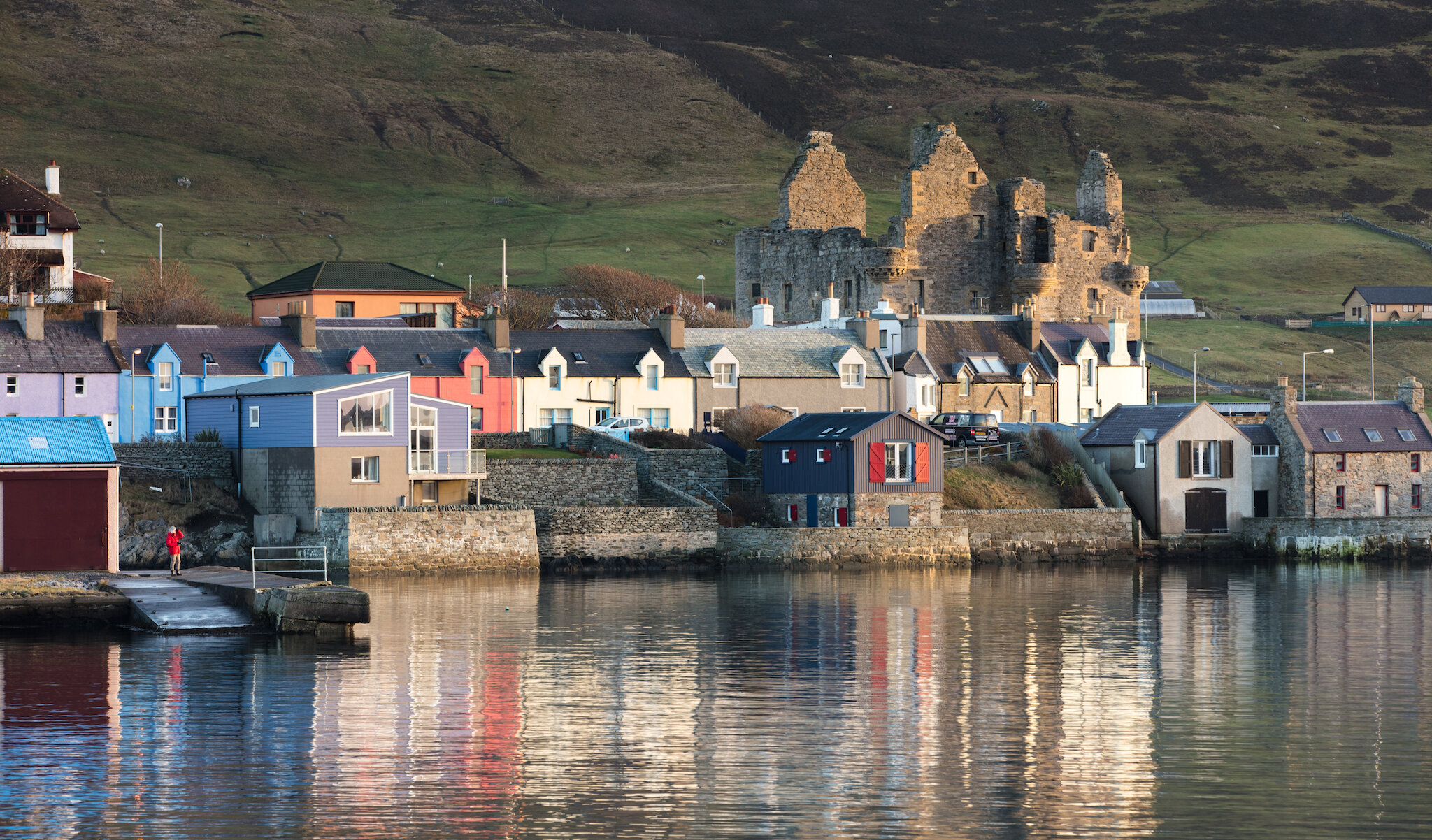
The fishing port of Scalloway, Shetland's capital until the 18th century, is a picturesque and surprisingly leafy village, shielded from Atlantic gales by the rugged isles of Trondra and Burra. To the north lie Tingwall's fertile valley and the promontories of Whiteness and Weisdale.

Overlooking the fine new harbour is Earl Patrick Stewart's Scalloway Castle, built by forced labour in 1600. It's a grand example of a Scottish fortified house, but was occupied for less than a century and is now roofless. Beneath the grand banqueting hall are large kitchens and a dungeon where 17th century 'witches', condemned to die on nearby Gallows Hill, awaited their fate. The castle is in the care of Historic Scotland and open to the public.

Scalloway Museum

A short walk along New Street (past a curious stone plaque depicting a theory of tidal motion) is the Scalloway Museum, opposite the Burn Beach. There's a fascinating display on the wartime exploits of Norway's `Shetland Bus' heroes, who made the village their secret base. Further west on Main Street is the Prince Olav Slipway, which was built by the Norwegians to repair the boats damaged by storms and enemy action during raids on their Nazi occupied homeland. Across the street Norway House was their barracks. The Museum also houses memorabilia from Scalloway's past, particularly the history of fishing in the district.

Traditional boats drawn up on shore recall the Viking past: in Norse times Scalloway (meaning `the bay of the booths') was the landing place for delegates attending Shetland's annual parliament or 'Ting', held on the Lawting Holm in Tingwall Loch, two miles north of the village. In those days there were no roads and most traffic went by sea - as it did well into the 19th century.

Small Boats in Scalloway

Nowadays the port of Scalloway sees a wide variety of craft, ranging from coasters and offshore oilfield tenders to trawlers, fish farm workboats and a growing fleet of pleasure boats and yachts in the two sheltered marinas. For the visiting yacht skipper, Scalloway makes an ideal base for cruising the west coast of Shetland.

Out at Port Arthur, beyond the west marina and Scalloway Boating Club, visitors are also welcome at the North Atlantic Fisheries College where you can peep into the mother and baby unit of a Lobster hatchery.

Scalloway's other attractions include its heated, 17-metre, indoor swimming pool, the public hall (much used as a concert venue), a youth centre, a visiting artists' studio, a hotel and guest houses, the college's fish restaurant, pubs, shops and playing fields.

Tingwall, Whiteness and Weisdale

In June and July the rich meadows of the Tingwall Valley, on the B9074 north of Scalloway, are one of the best places to see Shetland's native wild flowers, including several species of orchid.

A picturesque golf course lies between the Loch of Asta and the Tingwall Loch - both fine trout lochs and also home to Shetland's only resident Mute Swans. Other birds include Tufted Duck, Red-breasted Merganser, and Common and Black-headed Gulls.

At the north end of the loch stands Tingwall Kirk, the `mother church' of Shetland, with its ancient graveyard overlooking the Lawting Holm where justice, of a sort, was dispensed in Viking times.

One of the most spectacular views in Shetland is from Wormadale Hill, on the boundary between Tingwall and Whiteness. Beyond the small isles lying in Whiteness Voe you can see as far as Fitful Head, Foula and even Fair Isle, 50 miles away.

Weisdale Voe

The Loch of Strom has a strong tide-race at its mouth and a tiny ruined castle nearby. At Soundside in Weisdale there's a rarity for Shetland - a churchyard shaded by trees! Nearby is the birthplace of John Clunies Ross, self-styled 'king' of the Cocos Islands in the 19th century. From the main road on the Scord of Sound, the hill above, there is another celebrated view over southern Shetland.

The head of Weisdale Voe is a good place to see wading birds, while a couple of hundred yards up the B9075 road is the beautifully restored Weisdale Mill, housing the Bonhoga art gallery and a café.

Other visitor attractions in Tingwall, Whiteness & Weisdale include the Tingwall Hall (known for its summer teas, farmers' market and social functions); Herrislea House Hotel and Shetland Jewellery.

The largest stand of trees in the islands surrounds the farm of Kergord, higher up the valley of Weisdale. Here the secluded farmhouse of Flemington once served as the Special Operations Executive's HQ for the wartime Shetland Bus operation to occupied Norway. The plantations, now being managed and extended, attract Chaffinches, Rooks and other woodland birds rare elsewhere in the islands.

What Next?

On This Site

  • Take a look at what the West Mainland has to offer
  • Play a round of golf at the Dale Golf Course

From Other Sites

Please bookmark or share this page: